

Imagine walking down a busy street on a crisp autumn morning. You spot someone wearing a vintage-style trench coat, another sporting neon sneakers that scream 1980s, and a third draped in minimalist linen that feels like it stepped out of a 1920s painting. It’s a kaleidoscope of styles, each telling a story. But here’s the twist: those stories aren’t just personal—they’re part of a grand, invisible pattern woven through time, culture, and human psychology.
Why do we wear what we wear? Is it just about looking good, or is there something deeper—a hidden thread connecting our wardrobes to the rhythm of history, the pulse of society, and the quirks of our minds? Let’s pull back the curtain on fashion trends and uncover the secret life behind the clothes we choose.
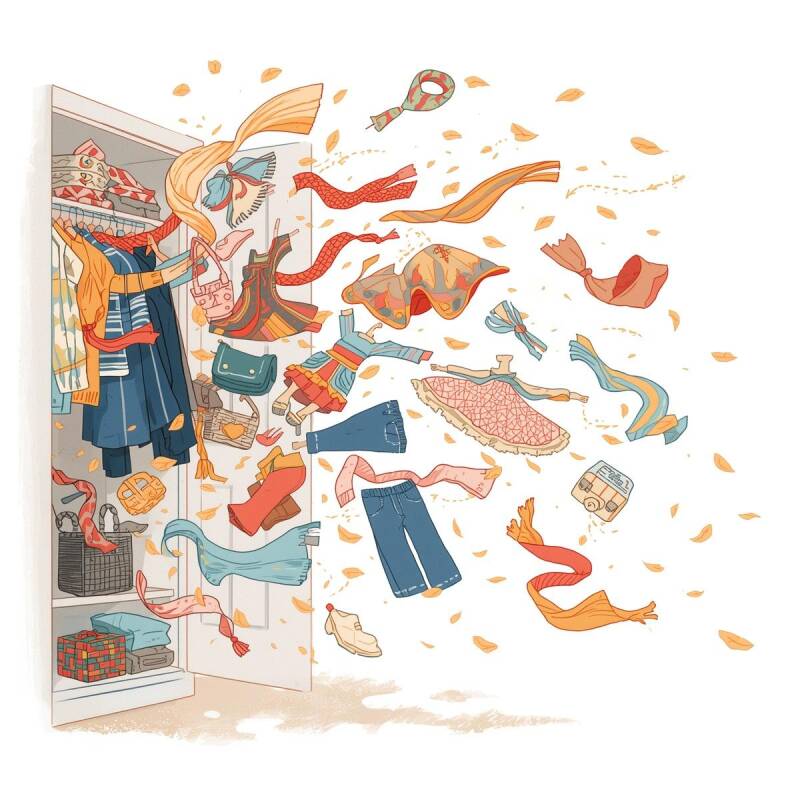
The Ripple Effect: How Fashion Became a Global Language
Fashion didn’t start as a global phenomenon. In fact, for centuries, what you wore was mostly dictated by your local community, your job, or your social class. But something shifted. According to the Economics Observatory, “the industrial revolution transformed fashion from a localized craft into a global business” [https://www.economicsobservatory.com/how-did-fashion-grow-into-a-global-business]. Suddenly, fabrics could travel farther, designs could spread faster, and style became a universal language.
Think of it like this: imagine a pebble dropped into a pond. The ripples expand outward, touching shores far beyond where the stone landed. That’s exactly what happened with fashion. As trade routes expanded and technology advanced, trends began to cross borders, cultures, and generations. What started as a Parisian silhouette in the 1800s could end up in a Tokyo boutique by the 1920s—and today, it might be trending on TikTok in Lagos.
But here’s the kicker: it’s not just about geography. It’s about timing. Fashion moves in cycles, like the seasons themselves. And that brings us to our next mystery…
The Time Traveler’s Wardrobe: Why Old Trends Keep Coming Back
Ever notice how bell-bottoms seem to vanish for a decade, only to return with a vengeance? Or how chokers from the 90s are suddenly everywhere again? This isn’t coincidence—it’s a pattern. According to Heuritech, fashion trends go through five distinct stages: introduction, rise, peak, decline, and obsolescence [https://heuritech.com/articles/five-stages-of-fashion-trend-life-cycle/]. But here’s the twist: after obsolescence, many trends don’t die—they hibernate, waiting for the right moment to wake up.
Why does this happen? One theory is nostalgia. As Meer explains, “fashion trends are often born from a desire to reconnect with the past” [https://www.meer.com/en/100542-how-fashion-trends-are-born-and-why-they-matter]. When the world feels uncertain, we look back to simpler times—or at least, the way we remember them. The 1970s boho chic returns when we crave freedom. The 1990s grunge revival hits when we want to rebel. It’s like fashion is a time machine, letting us dress up our memories.
But it’s not just about looking back. It’s also about looking forward. Designers and brands constantly reinvent old ideas, blending them with new technologies and cultural shifts. The result? A never-ending loop of innovation and nostalgia, where the past and future dance together on the runway.

The Psychology of Style: What Your Clothes Say About You (Even If You Don’t Realize It)
Let’s get personal for a moment. Have you ever picked out an outfit and felt instantly more confident? Or maybe you’ve worn something that made you feel like a different person altogether? That’s no accident. According to Fashion is Psychology, “trend cycles are driven by our psychological need for novelty and belonging” [https://fashionispsychology.com/the-psychology-behind-trend-cycles-why-we-cant-resist-the-latest-fashion-fads/]. In other words, fashion isn’t just about fabric—it’s about feelings.
Here’s how it works:
- Novelty: Our brains love new things. A fresh trend gives us a dopamine hit, making us feel excited and alive.
- Belonging: Wearing what others wear helps us fit in. It’s a silent signal that says, “I’m part of this group.”
- Identity: What we choose to wear can express who we are—or who we want to be.
But there’s a catch. While trends can make us feel connected, they can also create pressure. The constant churn of new styles means we’re always chasing the next big thing. And that can be exhausting. As Vogue notes, “fashion through the decades shows how quickly tastes change—and how easily we can get caught up in the cycle” [https://www.vogue.com/tag/misc/fashion-through-the-decades].
So, how do we navigate this? By remembering that fashion is a tool, not a rule. You can borrow from trends without letting them borrow from you.

Eva & Franco Mattes; Photo by Katherine Du Tiel, CC0, via Wikimedia Commons
The Hidden Thread: Patterns in the Chaos
Now, let’s zoom out and look at the bigger picture. What connects all these threads—the global spread of fashion, the cyclical nature of trends, and the psychology behind our choices? The answer lies in patterns. Just like the spirals in a seashell or the branches of a tree, fashion follows rhythms that repeat across time and space.
Consider this table, which outlines the key patterns we’ve uncovered:
| Pattern | Description | Example |
|---|---|---|
| Globalization | Trends spread across borders and cultures | Parisian haute couture influencing streetwear in Seoul |
| Cyclical Revival | Old trends return after a period of dormancy | 1990s chokers making a comeback in 2020s |
| Psychological Drivers | Novelty and belonging shape our choices | Dopamine rush from buying a new trend item |
| Cultural Reflection | Fashion mirrors societal moods and events | Minimalism rising during economic downturns |
These patterns aren’t random. They’re part of a larger tapestry, woven from human behavior, technological progress, and cultural shifts. And the best part? You don’t need a degree in fashion history to see them. You just need to pay attention.
Whimsical Reflection: The Dance of Cloth and Time
There’s something magical about the way fashion moves through time. It’s like a dance, where each generation takes a step, then passes the rhythm to the next. Sometimes the steps are bold and loud, like the neon excesses of the 1980s. Other times, they’re soft and subtle, like the quiet elegance of the 1950s. But the music never stops.
As we walk through our own wardrobes, we’re not just choosing clothes—we’re joining a centuries-old conversation. Every stitch, every color, every silhouette carries a whisper of the past and a promise of the future. So the next time you put on your favorite jacket or tie your shoelaces, take a moment to listen. What story is your outfit telling? And what thread are you adding to the hidden tapestry?
Actionable Takeaway: Dress with Intention
Ready to make your wardrobe work for you? Here are three simple steps:
- Audit your closet: Look for patterns in what you wear. What makes you feel confident? What do you reach for again and again?
- Embrace trends mindfully: Borrow from the latest styles, but don’t let them dictate your identity. Choose what resonates with you.
- Celebrate the cycle: Don’t fear the return of old trends. Instead, see them as opportunities to rediscover and reimagine.
Remember, fashion is a language. Speak it with intention.
Join The Hidden Thread
Did you enjoy this peek into the hidden world? There is so much more to discover about the patterns of nature. From the migration of monarch butterflies to the rhythm of the tides, the world is full of secrets waiting to be found. Subscribe to The Hidden Thread to get a new story of wonder delivered to your inbox every week. No spam, just curiosity.

Book Tip: Expand Your Wardrobe of Ideas
If you loved this post, you’ll adore The Fashion System by Roland Barthes. This classic book dives deep into the language of fashion, exploring how clothing communicates meaning. Available on Amazon in English, it’s a perfect companion for anyone curious about the hidden threads of style.
Sources Used:
-
According to the Economics Observatory, "the industrial revolution transformed fashion from a localized craft into a global business" [https://www.economicsobservatory.com/how-did-fashion-grow-into-a-global-business]
According to the Fashion Institute of Technology, "the fashion history timeline documents the evolution of style from ancient civilizations to the modern era" [https://fashionhistory.fitnyc.edu/]
According to Vogue, "fashion through the decades reveals how quickly tastes change and how cultural shifts influence what we wear" [https://www.vogue.com/tag/misc/fashion-through-the-decades]
According to Fashion is Psychology, "trend cycles are driven by our psychological need for novelty and belonging" [https://fashionispsychology.com/the-psychology-behind-trend-cycles-why-we-cant-resist-the-latest-fashion-fads/]
According to Heuritech, "fashion trends go through five distinct stages: introduction, rise, peak, decline, and obsolescence" [https://heuritech.com/articles/five-stages-of-fashion-trend-life-cycle/]
According to Meer, "fashion trends are often born from a desire to reconnect with the past" [https://www.meer.com/en/100542-how-fashion-trends-are-born-and-why-they-matter]
Add comment
Comments