

Imagine you’re staring at a wall covered in static—like an old TV tuned to a dead channel. Just noise. Just dots. But then, you relax your eyes, let them drift, and suddenly… pop!A 3D dragon emerges from the chaos, hovering right in front of you. No glasses. No screen. Just your brain doing a little magic trick.
Welcome to the world of stereograms—those mesmerizing images that hide 3D scenes inside 2D patterns. They’ve been around longer than you think, and they reveal something profound about how we see the world. In this post, we’ll uncover the hidden patterns behind stereograms, explore their surprising history, and learn how your brain turns flat noise into floating wonders.
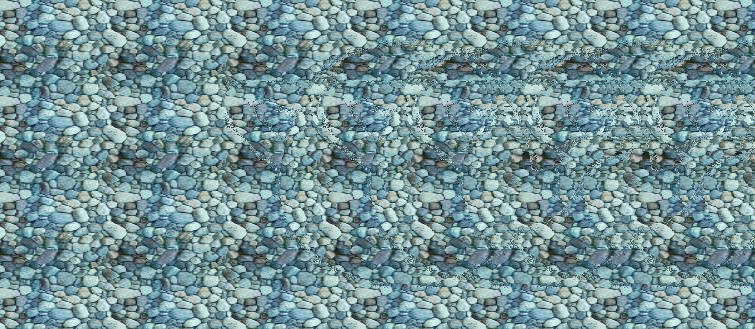
What Exactly Is a Stereogram?
A stereogram is an optical illusion that creates the perception of depth from a single flat image. It works by exploiting how our brains combine two slightly different views—one from each eye—to build a 3D picture of the world. This process is called stereopsis.
In a typical stereogram, a repeating pattern is subtly shifted. When you view it correctly, your brain interprets those shifts as depth cues, and suddenly, shapes rise or sink into the image. It’s like your mind is solving a puzzle it didn’t know existed.
According to the Yale Project on Computer Graphics, “Stereograms are images that encode depth information in a way that the human visual system can decode without special equipment” Brown Math Project Overview.
How Your Brain Plays Along
Your eyes are about 2.5 inches apart, which means each one sees the world from a slightly different angle. Your brain merges these two views into a single 3D experience. This is why you can catch a ball or judge how far away a curb is.
Stereograms hack this system. They present each eye with a slightly different version of the same pattern. When your brain tries to match them up, it interprets the mismatch as depth. It’s like a visual riddle: “If these two patterns don’t line up, there must be something between them.”
According to researchers at the University of California, “The human visual system is remarkably adept at extracting depth from binocular disparity” Science Journal Article.
But here’s the twist: not everyone can see stereograms. Some people have trouble merging the two images, either due to vision differences or simply because their brain hasn’t learned the trick yet. It’s a skill, like learning to ride a bike.
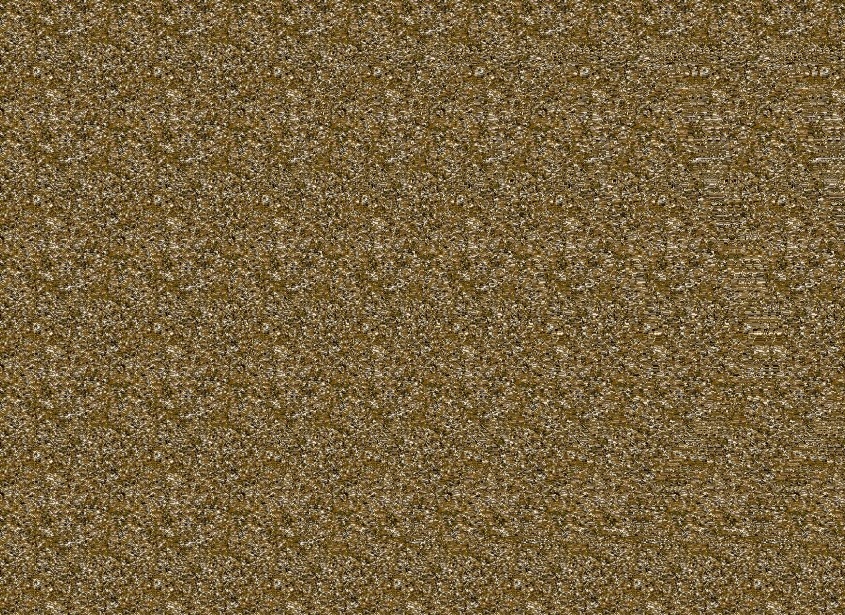
A History Written in Depth
Stereograms aren’t new. In fact, they date back to the 19th century. Sir Charles Wheatstone, a British scientist, invented the first stereoscope in 1838—a device that showed two separate images to each eye, creating a 3D effect.
According to Wheatstone himself, “The phenomenon of binocular vision is one of the most remarkable facts in the physiology of the senses” Wheatstone Paper, 1838.
Fast forward to the 1970s, and stereograms evolved into autostereograms—images that don’t require a viewer. These became wildly popular in the 1990s with the “Magic Eye” books. Suddenly, everyone was crossing their eyes or staring into space trying to find the hidden whale or castle.
The resurgence wasn’t just nostalgia. Researchers discovered that autostereograms could be used to test depth perception and even treat certain vision disorders.
_(14757363302).jpg)
Internet Archive Book Images, No restrictions, via Wikimedia Commons
The Science Behind the Illusion
Creating a stereogram isn’t just art—it’s math. To generate one, you start with a depth map: a grayscale image where brightness represents height. Then, you repeat a texture pattern across the image, shifting it based on the depth map. Where the pattern shifts more, your brain sees depth.
According to NVIDIA’s GPU Gems, “Real-time stereogram generation involves mapping depth values to horizontal shifts in a repeating texture” NVIDIA GPU Gems.
Here’s a simplified breakdown:
| Step | What happens |
|---|---|
| 1 | Create a depth map (black = far, white = near) |
| 2 | Choose a repeating pattern (dots, lines, textures) |
| 3 | Shift the pattern horizontally based on depth |
| 4 | View with relaxed eyes to unlock the 3D image |
This process is so precise that even small errors in the shift can ruin the illusion. That’s why early stereograms were hand-drawn, and modern ones are generated by computers.
Why Some People Can’t See Them
Not everyone can unlock the hidden picture. Some people have stereo blindness, meaning their brains can’t merge the two images into a 3D scene. Others just haven’t learned the viewing technique.
There are two main ways to view stereograms:
- Parallel Viewing: Look throughthe image as if focusing on something far away.
- Crossed Viewing: Cross your eyes until the image snaps into focus.
Both methods work, but parallel viewing is more common for Magic Eye-style images.
According to a study published in Perception, “Individual differences in stereoscopic vision can affect the ability to perceive autostereograms” SAGE Journals.
If you’re struggling, don’t worry. Practice helps. Try starting with simpler images or using a mirror to guide your focus.
Stereograms in the Digital Age
Today, stereograms aren’t just for fun. They’re used in:
- Virtual Reality: To create immersive 3D environments
- Medical Imaging: To visualize complex structures in 3D
- Art and Design: To create interactive visual experiences
According to IEEE researchers, “Computational reconstruction of stereopsis mechanisms has advanced our understanding of human vision and enabled new applications in computer graphics” IEEE Document.
Even video games use stereoscopic techniques to enhance depth perception. And with the rise of AR and VR, stereograms are more relevant than ever.
The Art of Hidden Patterns
What makes stereograms so captivating isn’t just the 3D effect—it’s the surprise. You’re looking at noise, and then suddenly, there’s a hidden world. It’s like finding a secret message in a sea of letters.
This pattern-hunting instinct is deeply human. We’re wired to look for meaning in chaos. Whether it’s faces in clouds or dragons in dots, our brains love to find order in disorder.
As one researcher put it, “The perception of depth from random-dot stereograms reveals fundamental properties of visual processing” Springer Article.
Whimsical Reflection: What Else Is Hiding in Plain Sight?
Stereograms remind us that reality is more layered than it seems. Just because something looks flat doesn’t mean it is. Just because you can’t see it doesn’t mean it’s not there.
Maybe the same is true for ideas, relationships, or even ourselves. Sometimes, you just need to shift your perspective—relax your focus, look a little differently—and suddenly, the hidden picture emerges.
Try It Yourself!
Want to see a stereogram in action? Here’s how:
- Find a Magic Eye image online (or print one out). By the way, the images in this article are also actual autostereograms.
- Hold it close to your face.
- Slowly move it away while keeping your eyes relaxed.
- When the pattern blurs slightly, focus through the image.
- Wait for the 3D shape to pop out.
If it doesn’t work the first time, try again. It’s like learning to whistle—practice makes perfect.
Join The Hidden Thread
Did you enjoy this peek into the hidden world? There is so much more to discover about the patterns of nature. From the migration of monarch butterflies to the rhythm of the tides, the world is full of secrets waiting to be found. Subscribe to The Hidden Thread to get a new story of wonder delivered to your inbox every week. No spam, just curiosity.

Sources Used:
According to the Yale Project on Computer Graphics (Brown University), "Stereograms are images that encode depth information in a way that the human visual system can decode without special equipment" [https://www.math.brown.edu/tbanchof/Yale/project14/stoverview.html]
According to Sir Charles Wheatstone (Stereoscopy.com Library), "The phenomenon of binocular vision is one of the most remarkable facts in the physiology of the senses" [https://www.stereoscopy.com/library/wheatstone-paper1838.html]
According to researchers publishing in Science (American Association for the Advancement of Science), the human visual system is remarkably adept at extracting depth from binocular disparity [https://www.science.org/doi/10.1126/science.145.3630.356]
According to NVIDIA (GPU Gems), "Real-time stereogram generation involves mapping depth values to horizontal shifts in a repeating texture" [https://developer.nvidia.com/gpugems/gpugems/part-vi-beyond-triangles/chapter-41-real-time-stereograms]
According to researchers publishing in Perception (SAGE Journals), "Individual differences in stereoscopic vision can affect the ability to perceive autostereograms" [https://journals.sagepub.com/doi/10.1068/p251137]
According to researchers publishing in Perception & Psychophysics (Springer), "The perception of depth from random-dot stereograms reveals fundamental properties of visual processing" [https://link.springer.com/article/10.3758/BF03202884]
According to IEEE researchers, computational reconstruction of stereopsis mechanisms has advanced our understanding of human vision and enabled new applications in computer graphics [https://ieeexplore.ieee.org/document/6768429]
According to the Yale Project on Computer Graphics (Brown University), the mechanics of stereogram construction rely on precise horizontal shifts tied to depth mapping [https://www.math.brown.edu/tbanchof/Yale/project14/stmechanics.html]
According to the Yale Project on Computer Graphics (Brown University), viewing techniques for stereograms fall into two categories: parallel viewing and crossed viewing [https://www.math.brown.edu/tbanchof/Yale/project14/stviewing.html]
According to researchers presenting at SPIE (International Society for Optics and Photonics), computational reconstruction of the mechanisms of human stereopsis provides insight into how the brain processes binocular depth [https://www.spiedigitallibrary.org/conference-proceedings-of-spie/2054/1/Computational-reconstruction-of-the-mechanisms-of-human-stereopsis/10.1117/12.171143.short]
According to Mathematische Basteleien, stereograms can be constructed using simple repeating patterns and carefully calculated shifts to produce the illusion of three-dimensional depth [https://mathematische-basteleien.de/stereogram.htm]
Add comment
Comments